
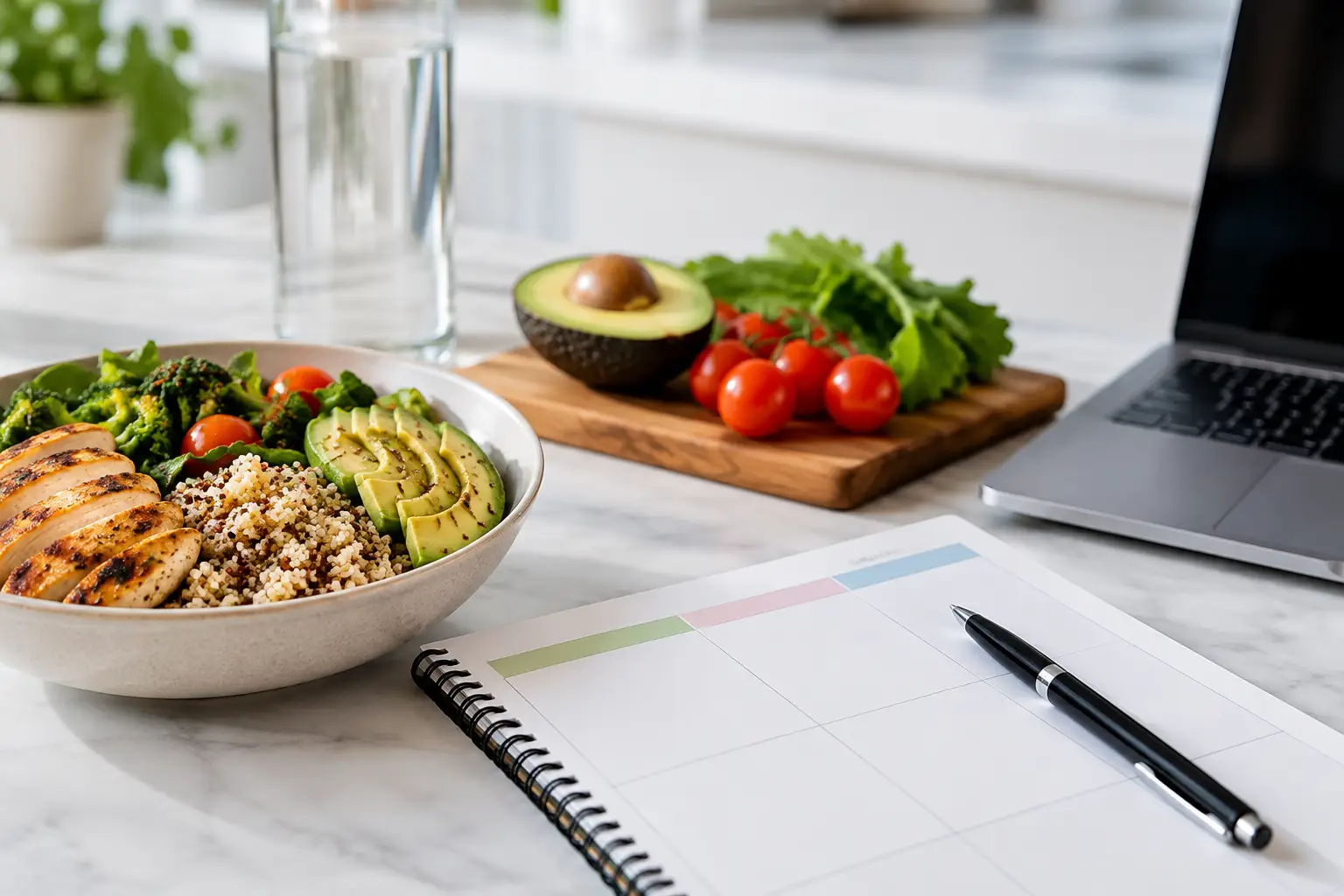
A food diary can look impressively accurate while still producing frustrating results. The usual problem is not a lack of effort. It is that the calorie target, serving sizes or macro targets have not been tested against real-life progress. This macro tracking guide helps you turn numbers into a flexible system you can use for fat loss, muscle gain or weight maintenance.
Macro tracking means recording the protein, carbohydrate and fat in the food and drink you consume, alongside total energy intake. It is more detailed than counting calories alone, but it should not turn every meal into a maths exercise. The goal is to create enough structure to make informed decisions, while leaving room for ordinary meals, social plans and foods you enjoy.
Start with a calorie target, not perfect percentages
Your macro targets must fit within an overall calorie target. A useful starting point is your estimated total daily energy expenditure, or TDEE. This is an estimate of the energy you use across a typical day, including normal movement and exercise.
For weight maintenance, begin close to your estimated TDEE. For fat loss, a moderate calorie deficit is generally easier to sustain than an aggressive one. For muscle gain, a small calorie surplus may be appropriate, particularly if you are new to resistance training or returning after time away.
An estimate is only a starting hypothesis. Activity trackers, food labels and even calculator outputs cannot account perfectly for your routine, appetite, sleep, stress and natural changes in daily movement. Use your target consistently for two to four weeks before deciding whether it needs adjustment.
Avoid choosing macros from a generic percentage split without considering your goal. A 40% carbohydrate, 30% protein and 30% fat approach may suit one person, but it can leave another with an impractical protein intake or too little fat. Set each macro in a more purposeful order instead.
A macro tracking guide to setting your targets
Set protein first
Protein is usually the most useful macro to set first because it supports muscle repair, helps preserve lean mass during a calorie deficit and can make meals more satisfying. Your ideal amount depends on body size, training routine, food preferences and goal.
People who lift weights regularly or are losing weight often benefit from a higher protein target than someone who is largely inactive. Rather than chasing a flawless number, choose a realistic daily range and distribute it across meals. If your target is 120 g, regularly landing between about 110 g and 125 g is far more useful than reaching 120 g exactly on rare, highly controlled days.
Give fat a sensible minimum
Dietary fat supports normal body functions and makes meals enjoyable. Cutting it extremely low just to create more room for carbohydrate is rarely a practical long-term strategy. Include regular sources such as olive oil, nuts, seeds, eggs, oily fish, dairy products or avocado, according to your dietary pattern and preferences.
The right amount varies. Some people prefer more fat and fewer carbohydrates because it suits their favourite meals and appetite. Others feel and train better with moderate fat and more carbohydrates. Consistency matters more than forcing yourself into a style of eating you dislike.
Let carbohydrates fill the remaining calories
After setting protein and fat, use carbohydrates to make up the rest of your calorie target. Carbohydrates are especially useful for people who walk a lot, run, cycle, play sport or train hard in the gym. They can also make it easier to build meals around familiar staples such as porridge, potatoes, rice, fruit, bread and beans.
If you feel flat during training, constantly hungry or unable to fit your normal meals into your targets, your distribution may need revisiting. That does not automatically mean carbohydrates are the problem. Total calories, meal timing, sleep and training volume can all affect how you feel.
Check the maths once
Protein provides about 4 calories per gram, carbohydrates provide about 4 calories per gram, and fat provides about 9 calories per gram. Multiply each target by its calorie value, then add the totals. Your macros should come close to your calorie target, allowing for small rounding differences in food databases and labels.
For example, at 2,000 calories, someone might choose 130 g protein, 65 g fat and 224 g carbohydrate. That works out to roughly 2,001 calories. The extra calorie is irrelevant. Treat targets as useful guideposts, not laboratory measurements.
Log food accurately enough to learn from it
Tracking works best when the data is consistently honest, not when it looks perfect. Log the cooking oil, sauces, drinks, nibbles while preparing dinner and the larger weekend meals. These are common blind spots because they are easy to forget, not because they represent failure.
Use a kitchen scale for calorie-dense foods when possible, especially oils, nut butters, cheese, cereal, rice, pasta and snacks. Measuring these for a few weeks improves portion awareness. You do not need to weigh every lettuce leaf indefinitely.
Be careful with database entries. Choose verified listings where available, compare the entry with the product label and check whether the weight refers to cooked or uncooked food. Dry rice and cooked rice are not interchangeable entries. The same issue applies to meat, pasta and many frozen foods.
When eating at a restaurant, use the best estimate you can and move on. Restaurant meals can contain more oil, butter or sauce than expected, so choosing a similar meal in your tracking app may be more realistic than selecting the lowest-calorie option. One imperfect entry does not undo a week of useful information.
Build meals around repeatable anchors
You do not need a different menu every day to track successfully. Repeating a few breakfasts and lunches reduces decision fatigue and makes your data more reliable. This is especially helpful during a busy working week.
Start each main meal with a protein source, then add carbohydrates and fats in portions that suit your remaining targets. If you prefer a substantial evening meal, save more calories and carbohydrates for dinner. If late-night hunger is a recurring problem, consider reserving a planned snack rather than hoping willpower handles it.
Think in terms of weekly patterns too. A higher-calorie meal out can fit your plan if most meals are aligned with your goals. Trying to compensate by skipping meals the next day often creates more hunger and less control. Return to your usual targets at the next meal instead.
Review trends before changing anything
Your body weight can shift from day to day because of food volume, salt intake, menstrual cycle changes, alcohol, soreness after exercise and hydration. A single weigh-in does not prove that you gained or lost body fat.
Weigh yourself under similar conditions, such as in the morning after using the toilet, then look at a weekly average or longer trend. Pair this with other signals: waist measurements, gym performance, energy levels, hunger, sleep and how clothing fits.
If your weight trend has not moved in the intended direction after at least two consistent weeks, first audit your logging. Check portions, weekends, drinks and cooking fats. If tracking has been reasonably consistent, adjust calories modestly, rather than making a dramatic cut. A small change is easier to evaluate and less likely to disrupt training or appetite.
For muscle gain, progress can be slower and less obvious. Look for gradual increases in body weight alongside improving strength, recovery and training quality. Rapid gain is not automatically productive gain.
Know when to use a lighter approach
Full macro tracking is a tool, not a requirement for lifelong health. It may be useful during a focused goal phase, when learning portions or when progress has stalled. Later, many people transition to tracking only protein and calories, using familiar meals and portions for the rest.
If logging makes you anxious, leads to rigid food rules or feels difficult to manage around a history of disordered eating, step back and seek support from an appropriately qualified healthcare professional or dietitian. Health improvement should build confidence, not make food feel like a constant test.
The best tracking plan is the one that gives you clearer feedback without taking over your life. Use the numbers to notice patterns, make one considered adjustment at a time and keep choosing habits you can realistically repeat next month.