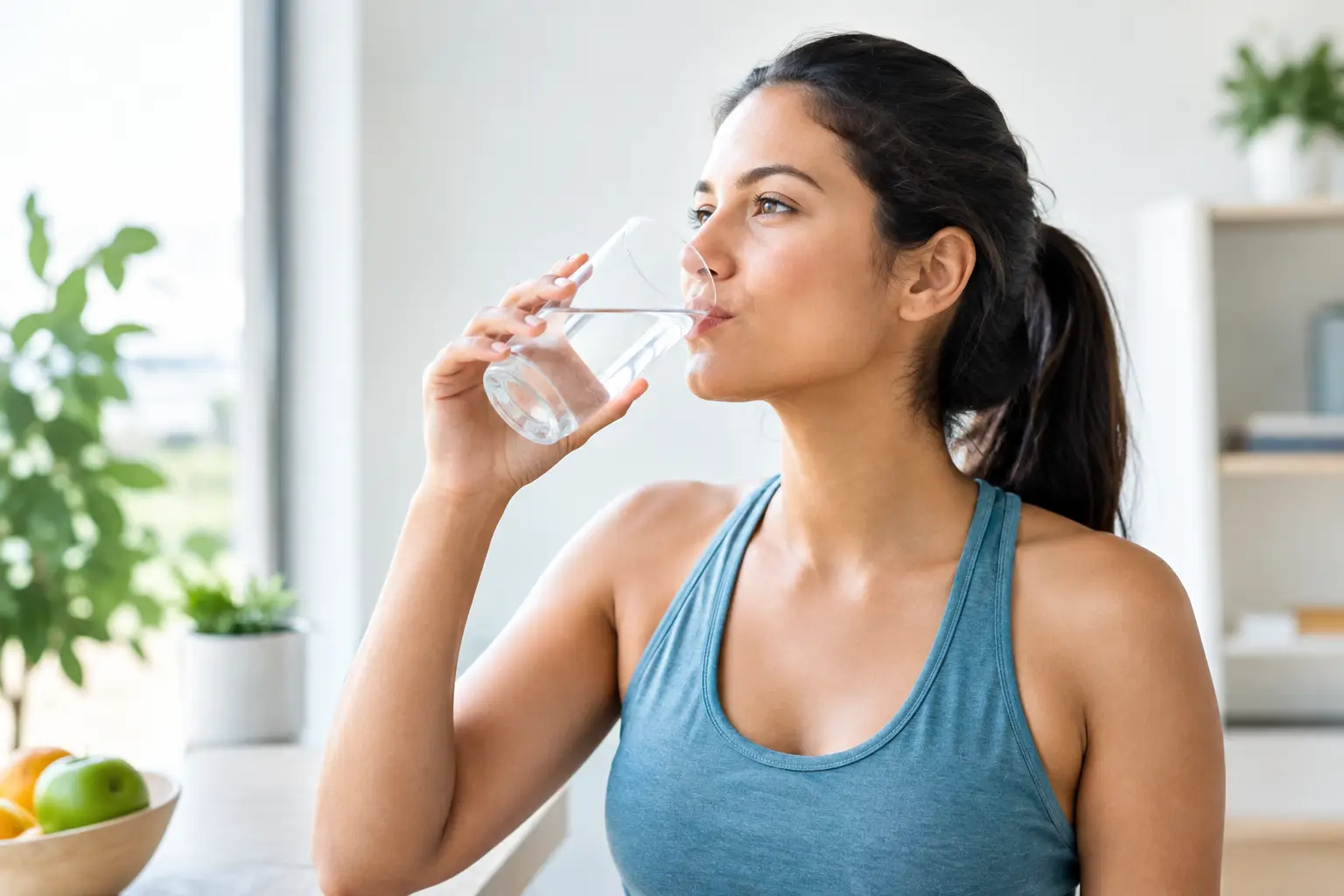
A 750 ml bottle can make hydration look like a simple target: finish it a few times and you are done. Your actual needs are more individual than that. If you are wondering, how much water should I drink, the most useful answer is a personal starting range followed by small adjustments based on your body, routine and environment.
A fixed number can be helpful when you need structure, but it should not become another health rule to force. Your body size, how active you are, the temperature, and some health circumstances all affect how much fluid makes sense on a typical day. The aim is to build a repeatable habit that supports your wider nutrition and activity goals.
Start with a water target based on body size
For many healthy adults, a practical starting point is around 30 to 35 ml of fluid per kilogram of body weight per day. This is not a medical prescription. It is a simple way to turn a vague goal into a number you can use, then refine.
For example, someone weighing 70 kg could begin with a daily target of roughly 2.1 to 2.5 litres. Someone weighing 90 kg might start around 2.7 to 3.2 litres. These figures refer to fluids you drink across the day, rather than the amount you try to consume at one sitting.
This approach is usually more useful than copying a friend’s target. A taller, heavier person often has different fluid needs from a smaller person, even if both work in the same office and follow the same workout plan. It also gives you a clear baseline before you start changing anything for exercise or hot weather.
Think in ranges, not one perfect number
Your needs will not be identical every day. A 2.4-litre target is better viewed as a useful centre point than a pass-or-fail line. On a quiet day at home, you may naturally sit near the lower end of your range. On a warm day with a long commute and a gym session, you may need more.
That flexibility matters. Trying to drink exactly the same amount regardless of your day can lead to either unnecessary effort or an amount that falls short when circumstances change. Consistency is valuable, but it should be built around your real routine.
Use your current routine as a reality check
Before adding several large bottles to your day, notice what you already drink. Many people have a reasonable total intake but consume most of it late in the day because water is not easily available during work, travel or childcare.
Others start well in the morning and then forget after lunch. In that case, the solution is usually not a more ambitious target. It is a better distribution plan. Matching your target to the points in the day where you are most likely to miss it makes the habit much easier to keep.
How much water should I drink when my day changes?
Your baseline is only the first step. Certain situations increase fluid losses or make it less practical to rely on your usual drinking pattern. Rather than guessing at a universal extra amount, adjust gradually and pay attention to the conditions.
Exercise and physically active days
Sweat loss varies widely. Two people can complete the same session in the same gym and need different amounts because of body size, intensity, clothing and how much they sweat. A gentle walk in mild weather does not require the same plan as a hard training session, manual work or a long outdoor cycle.
Start hydrated by drinking regularly beforehand, keep water accessible during longer or hotter sessions, and continue drinking afterwards as part of your normal routine. If you regularly train for more than an hour, exercise in heat, or finish sessions with salt marks on your clothing, your fluid and electrolyte needs may need more deliberate planning than a standard daily target provides.
Do not treat large volumes all at once as a shortcut. Spreading intake across the day is more comfortable and easier to manage. For most recreational exercisers, a bottle nearby and a consistent post-exercise drinking habit are more useful than complex calculations.
Heat, travel and indoor heating
Warm weather is an obvious reason to increase your intake, but dry indoor environments, long journeys and air-conditioned spaces can also change what feels comfortable. You may not notice the same cues you would during outdoor activity, especially when you are focused on work or travelling.
Plan ahead in these situations. Fill a bottle before leaving home, bring it into meetings, and keep water within reach when driving or working at a desk. Convenience is not a minor detail: people are much more likely to drink steadily when the next glass is already nearby.
Illness and health conditions
Vomiting, diarrhoea, fever and other short-term illnesses can affect fluid balance quickly. They may also require more than plain water, particularly when losses are substantial. Follow clinical advice, and seek medical support when symptoms are severe, persistent or accompanied by concerns such as confusion, fainting or an inability to keep fluids down.
Some people should not use a general hydration formula without professional guidance. This includes those who have been advised to limit fluids because of kidney, heart or liver conditions, as well as people taking medicines that alter fluid balance. Pregnancy and breastfeeding can also change needs. In these situations, an individual recommendation from a clinician takes priority over any online calculator.
Turn your target into an everyday system
Knowing your number is useful only if it fits your day. A simple approach is to divide your target into natural drinking moments rather than constantly measuring every sip. You might have a glass after waking, one with each meal, a bottle during work or study, and water around planned activity.
Choose a bottle size that makes the maths easy. With a 2-litre target, a 500 ml bottle filled four times is clear and manageable. With a 2.5-litre target, one 750 ml bottle three times plus a glass with meals may feel more natural. The best bottle is not the largest one available; it is the one you will comfortably refill and carry.
It can help to pair drinking water with habits that already happen every day. Keep a glass near the kettle, refill your bottle before leaving for work, or drink some water while preparing meals. These cues reduce the need to rely on memory and make hydration part of your routine rather than another task on a checklist.
Avoid turning the process into a competition. More is not automatically better, and rapidly drinking excessive amounts can be unsafe. Your goal is a steady, appropriate pattern that reflects your needs, not an impressive number on an app.
Review your target after two weeks
Give a new hydration routine enough time to become normal before judging it. After roughly two weeks, ask whether the target was realistic on both ordinary and active days. Were you constantly forcing drinks, or did you regularly run out before the afternoon? Did hot days, long travel or training sessions expose gaps in your plan?
Adjust in small steps, such as 250 to 500 ml, rather than making dramatic changes. This keeps the process practical and helps you learn what works for your body. A hydration calculator can provide a useful starting estimate, but your daily habits are what turn that estimate into a lasting result.
The most helpful water target is the one that accounts for your body and still works on a busy Wednesday. Start with a sensible range, make access easy, and let consistent observation guide the next adjustment.