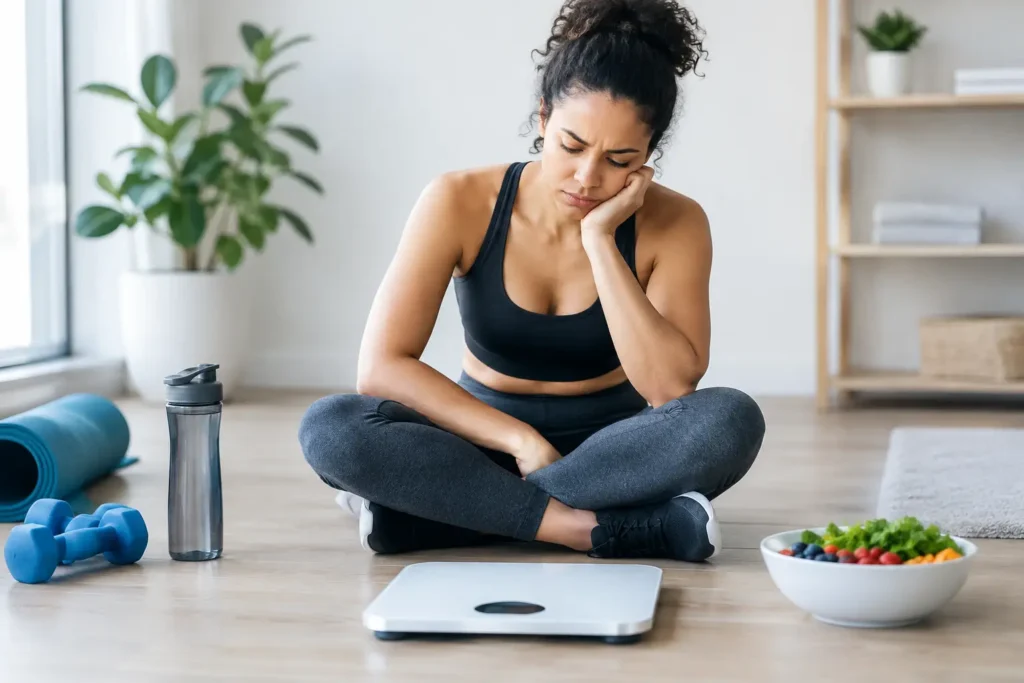
A two-kilogram change on the scale can mean very different things. It may reflect fat loss, muscle gain, water shifts, a salty meal or simply the time of day. Learning how to measure body fat gives you a more useful view of progress, especially if you are exercising regularly or your body weight has stopped changing.
No at-home method can measure body fat with perfect precision. The most valuable approach is the one you can repeat under similar conditions. A consistent estimate helps you identify the direction of change, then make informed decisions about your food intake, training and recovery without reacting to normal day-to-day fluctuations.
What a body-fat percentage actually tells you
Body-fat percentage is the proportion of your total body weight made up of fat mass. The rest includes muscle, bone, organs and body water, often grouped together as fat-free mass. For example, a person weighing 70 kg with 21 kg of body fat has a body-fat percentage of 30%.
This differs from BMI, which compares weight with height but cannot distinguish between fat and muscle. BMI can be a useful population screening measure, yet it may overestimate body fat in a muscular person and underestimate it in someone with low muscle mass. Body-fat measurement adds context, but it is still an estimate rather than a verdict on your health or appearance.
Healthy ranges vary with age, sex, genetics and life stage. A number that suits a young competitive athlete will not necessarily suit someone focused on energy, strength and long-term health. Rather than chasing the lowest possible percentage, look for a sustainable range alongside good fitness, adequate nutrition, regular sleep and a routine you can maintain.
How to measure body fat: choose the right method
The best method depends on whether you need a convenient trend, a closer estimate or a clinical assessment. Accuracy matters, but repeatability matters just as much when you are monitoring change over time.
Smart scales: convenient, but sensitive to conditions
Most body-fat scales use bioelectrical impedance analysis, or BIA. A harmless electrical signal passes through the body, and the device estimates body composition from how easily that signal travels through water-containing tissue. Because muscle holds more water than fat, the scale uses this information, along with your height, weight, age and sex, to produce an estimate.
This is quick and accessible, but hydration can noticeably affect the result. A tough workout, alcohol, a high-salt evening meal, menstruation, illness or measuring after a shower can all change the reading. Foot-to-foot scales also estimate the whole body from a limited pathway, so the number is less precise than it may appear.
Use a smart scale as a trend tool. Weigh yourself at the same time, ideally in the morning after using the toilet and before eating or drinking. Keep your conditions as similar as possible, and compare weekly or monthly trends rather than worrying about one result.
Skinfold calipers: useful when technique is consistent
Skinfold calipers measure the thickness of fat beneath the skin at specific sites, such as the abdomen, thigh or triceps. Those measurements are entered into an equation that estimates total body fat.
When performed by a trained practitioner, calipers can be a practical and fairly reliable option. At home, the biggest challenge is technique. Finding the same site, lifting the skinfold correctly and applying the calipers at the right angle takes practice. Measuring yourself can also be awkward, particularly at the back of the body.
If you use calipers, follow one recognised protocol every time and take two or three readings at each site. Record the average. Do not switch between formulas or measurement sites mid-way through a fat-loss phase, because you will lose the ability to compare results properly.
Tape measurements: simple and highly practical
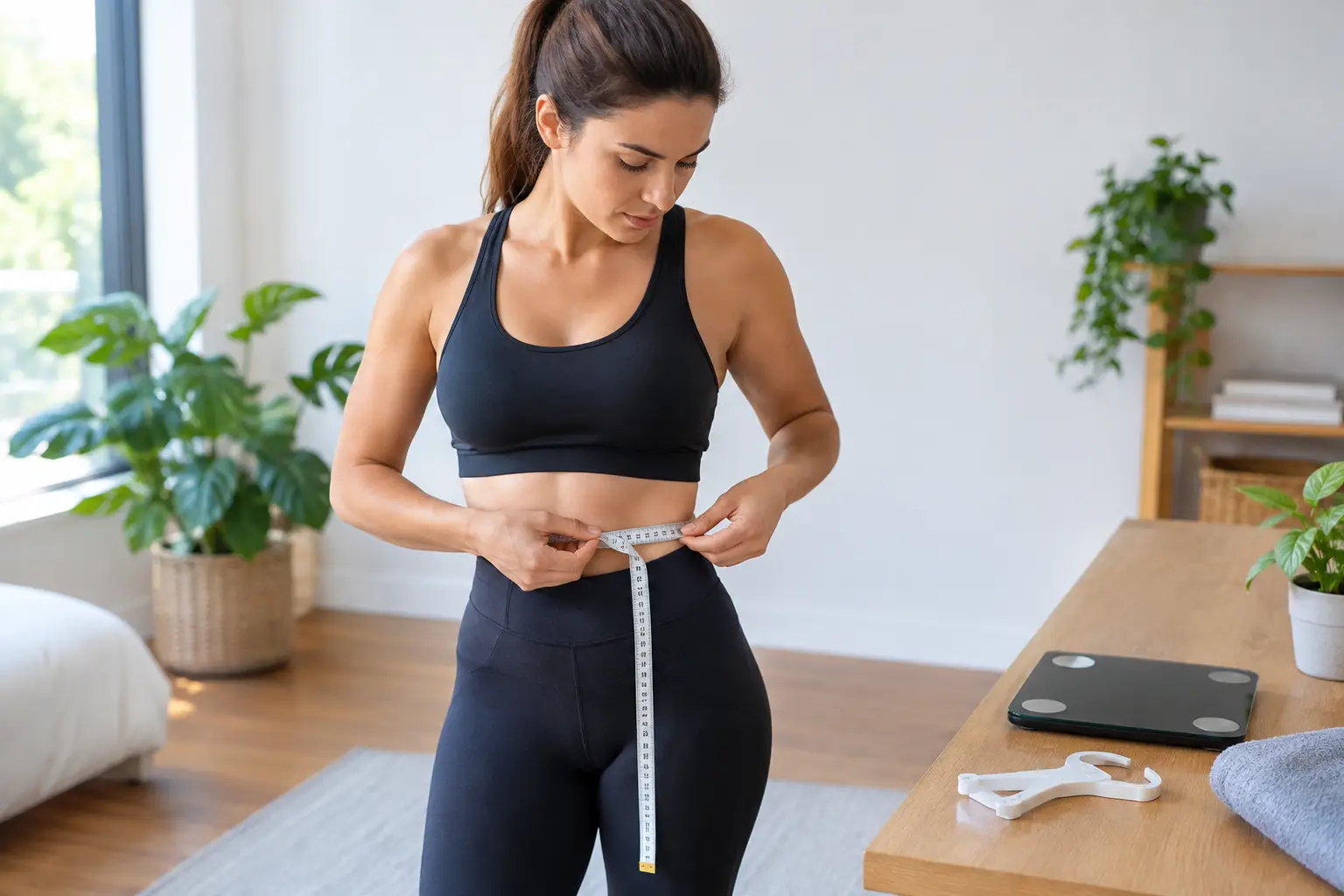
A tape measure does not directly calculate body fat, but waist circumference and body-shape measurements are meaningful indicators of change. Reductions around the waist often reflect a reduction in abdominal fat, which is particularly relevant to metabolic health.
Measure your waist with a flexible tape placed horizontally around your midsection, usually midway between the bottom of your ribs and the top of your hip bones. Breathe out normally, without pulling your stomach in, then record the measurement. The tape should be snug but should not compress the skin.
Taking waist, hip, chest, upper-arm and thigh measurements every two to four weeks can reveal changes that the scale misses. This is especially helpful when strength training, because gaining some muscle while losing fat may leave body weight largely unchanged.
DEXA and professional scans: a detailed snapshot
A DEXA scan uses low-dose X-rays to estimate bone density, lean mass and fat mass across different body regions. It can show fat distribution, including estimates of visceral fat around the organs. This makes it more informative than most home methods, but it is not flawless. Hydration, machine calibration and the analysis software can still influence results.
Other professional options include air-displacement plethysmography, often known by the Bod Pod name, and underwater weighing. These can provide useful estimates, but access and cost make them less practical for routine tracking. A professional scan can be worthwhile as an occasional baseline, particularly if you are highly motivated by data. It is rarely necessary every month.
Make your measurements comparable
Body composition changes slowly enough that frequent testing can create more noise than insight. For most people, measuring every two to four weeks is plenty. If you use a BIA scale daily, treat it like body weight: calculate a weekly average rather than interpreting individual readings.
Keep the routine consistent. Measure at the same time of day, use the same device, wear similar clothing or none, and avoid testing straight after exercise. If you menstruate, compare readings at a similar point in your cycle where possible, since fluid retention can temporarily raise weight and alter BIA estimates.
Your log should include body weight, waist measurement and your chosen body-fat estimate. Add a brief note on training performance, energy levels and how clothes fit. These markers provide a fuller picture than any single percentage.
Avoid the most common interpretation mistakes
First, do not compare numbers from different methods as though they are interchangeable. A smart scale may say 26%, while calipers or DEXA produce a different number. That does not automatically mean one is broken. Each relies on different assumptions and equations. Compare like with like.
Second, do not assume faster change is better. A sharp drop in a BIA reading over a few days is often water loss, not a sudden reduction in fat mass. Meaningful fat loss generally appears as a gradual trend across several weeks.
Finally, do not let a body-fat estimate override how you feel or function. Restrictive eating, poor recovery, reduced strength, persistent fatigue and disrupted sleep are signs that a plan may need adjustment, even if the number is moving in the direction you expected.
Turn the result into a useful next step
If your measurements show a stable upward trend and fat loss is your goal, review the habits that create your average intake: portion sizes, snacks, drinks, restaurant meals and lower-activity days. A modest, sustainable calorie deficit is usually more productive than an aggressive reset.
If your waist is reducing while strength is stable or improving, you are likely making positive progress even when the scale is slow. Maintain regular resistance training, eat enough protein for your needs and give the process time. If you are trying to gain muscle, a small rise in body-fat percentage may be normal, but a rapidly increasing waist measurement suggests your calorie surplus may be larger than intended.
The aim is not to find a perfect number. It is to understand your body well enough to spot a genuine trend, adjust with calm confidence and keep building habits that support lasting health.