
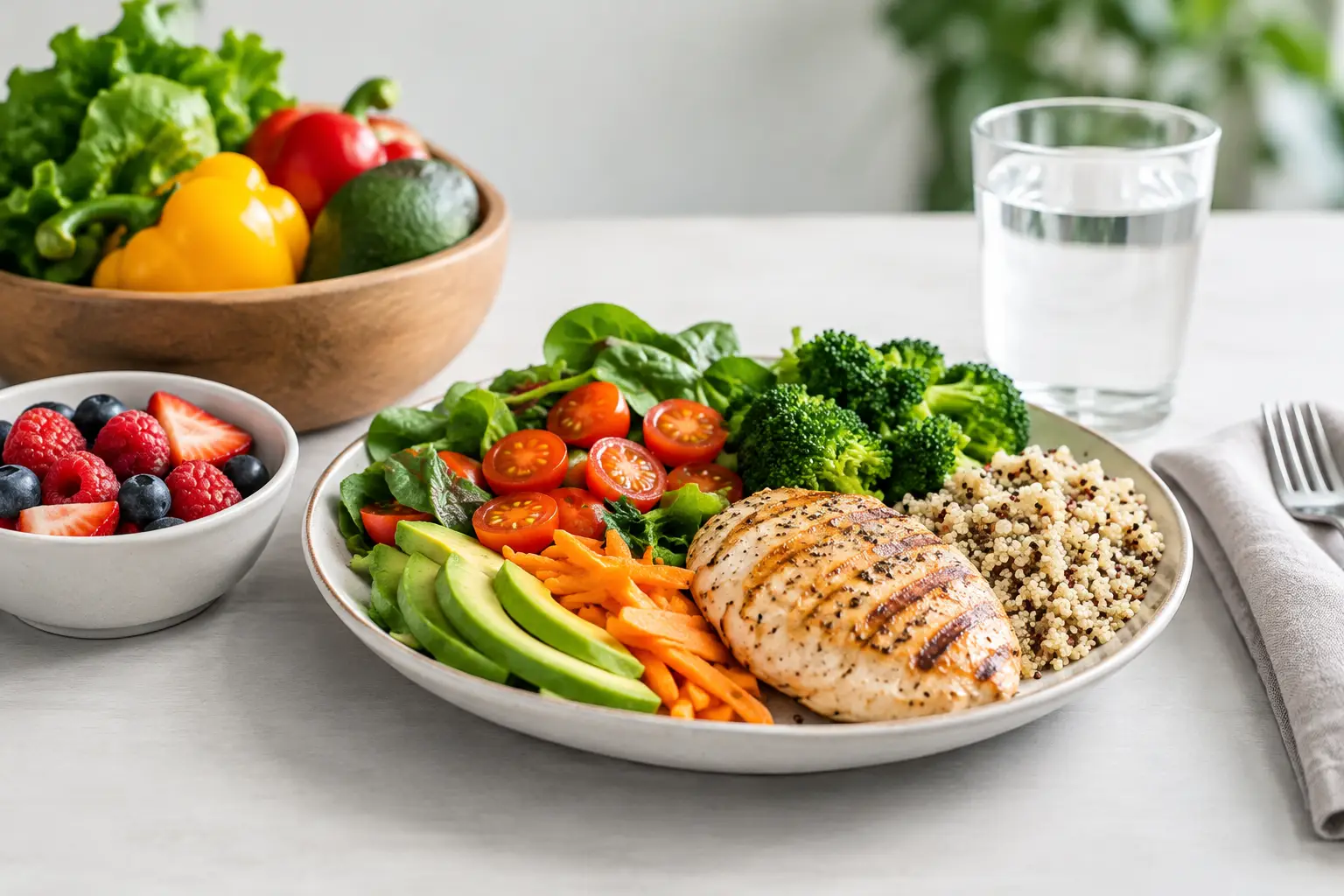
A lunch that looks healthy can still leave you hungry an hour later. A dinner that supports your training can still overshoot your energy needs if the portions do not match your goal. Everyday Nutrition is less about finding one perfect menu and more about building a balanced meal you can repeat, adjust and enjoy.
Everyday nutrition starts with a balanced meal
A balanced meal is not a plate that looks identical every day. It is a useful structure: a source of protein, a satisfying carbohydrate source, vegetables or fruit, and a small amount of fat where it adds flavour or fullness. The proportions should shift with your appetite, activity level and calorie target.
For someone aiming to lose weight, the structure helps make a calorie deficit more manageable without relying on tiny portions. For someone maintaining weight or building muscle, it creates room for enough energy to train, recover and stay consistent. The ingredients can be simple: eggs on wholegrain toast with tomatoes, a chicken and rice bowl with vegetables, or beans with a jacket potato and salad.
The goal is not to make every meal perfectly balanced in isolation. A lower-protein breakfast or a meal out with friends can fit well when the overall day is reasonably aligned with your needs.
Start with a protein anchor
Begin by choosing the main protein in the meal, then build around it. This makes the meal more filling and helps you spread your daily protein target across the day rather than trying to catch up at dinner.
Your preferred options may include fish, chicken, lean meat, eggs, Greek yoghurt, tofu, tempeh, lentils or beans. The right serving depends on your personal protein target, which can vary with body size, activity and goals. If you have calculated a daily target, dividing it across three or four eating occasions gives you a practical starting point.
Protein alone does not make a meal balanced. A grilled chicken breast with no carbohydrate, colour or fat may technically be high in protein but may not keep you satisfied or provide the energy you need for an active afternoon.
Match carbohydrates to what your day requires
Carbohydrates are especially useful when you walk a lot, train regularly or simply need steady energy for work and family life. Potatoes, oats, rice, pasta, bread, fruit, pulses and cereals can all have a place.
Portion size is where personal data becomes helpful. A person with a higher total daily energy expenditure will usually have more room for carbohydrate than someone following a lower-calorie weight-loss plan. You do not need to weigh every meal forever, but measuring familiar foods for a short period can improve your portion awareness.
On a less active day, you might use a smaller serving of rice and add extra vegetables. Before an evening gym session, a more substantial carbohydrate portion may feel and perform better. Neither choice is morally better. It simply matches the meal to the job it needs to do.
Use portions before chasing perfection
Many people know which foods are nutritious but struggle with consistency because their meals are either too restrictive or too vague. A practical plate check can close that gap. Aim for a clear protein source, plenty of vegetables or fruit, a carbohydrate portion that suits your energy needs, and a modest serving of fats such as olive oil, avocado, nuts, seeds or cheese.
Foods higher in fat are nutritious but energy-dense, so portions matter. A generous pour of oil, handfuls of nuts and creamy sauces can change a meal’s calorie total quickly. That does not mean removing them. It means using them deliberately, especially if your goal is weight loss.
The same applies to foods often labelled as treats. Pizza, curry, dessert and a takeaway can fit into everyday nutrition when they are occasional choices rather than the only option available on busy nights. Add a side salad, choose a protein-rich topping, or serve a smaller portion with fruit afterwards. Small adjustments are usually more sustainable than food rules.
Build a feedback loop from your results
Your body gives useful information after meals. Notice hunger, energy, concentration, training performance and how satisfied you feel two to three hours later. If you are regularly hungry soon after eating, the meal may need more protein, fibre-rich food or overall volume. If your weight trend is not moving as expected after several weeks, portions may need reviewing.
Use trends rather than one day of eating or one weigh-in. Sleep, restaurant meals, menstrual cycles and training can all affect appetite and scale weight. Fit Metrics Lab tools can provide a useful calorie and protein starting point, but your real-world results help you refine it.
A balanced meal should make healthy choices easier, not turn eating into a daily test. Start with one meal you already eat often, improve its structure, and give yourself enough time to see whether it supports the way you want to feel.